
Topical Map Generator
Build your topical map from one idea
Google rewards depth over breadth. A topical map is how you plan for that — pillars you want to own, with subtopic pages beneath each one, each targeting a distinct search. Work through it and you develop topical authority: the signal that tells Google your site knows its subject.
How it works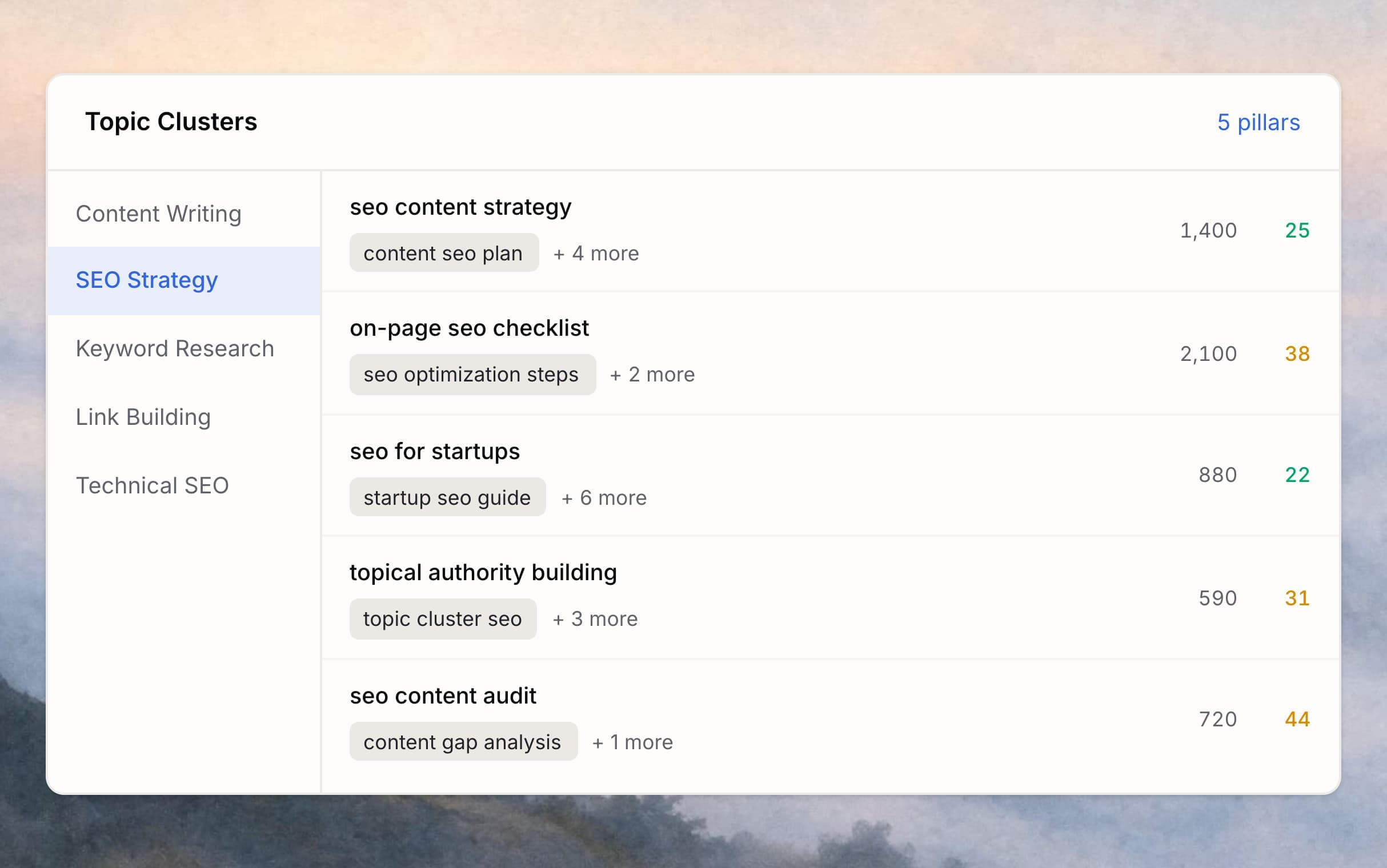
Why topical maps matter
A clearer way to plan content
Turn Keyword Research Into a Clear Content Plan
Raw keyword lists are hard to act on. A topical map organizes related terms into structured clusters, making it easier to see which pages belong together, which topics deserve pillar content, and what to publish first.
Strengthen Internal Linking and Site Structure
A strong topical map gives your content a logical structure. That makes it easier to connect related pages, guide visitors to the next relevant topic, and help search engines discover and understand more of your site through crawlable internal links.
Create Content That Feels More Helpful
Google's guidance emphasizes content that is helpful, reliable, and substantial. A topical map helps you plan coverage with that standard in mind by surfacing the subtopics and angles needed to make a page more complete and genuinely useful.
Prioritize Topics With Real Business Value
Not every cluster deserves equal effort. A topical map helps you separate high-value opportunities from low-impact ones, so your team can focus on the topics most likely to support your product, audience, and growth goals.
Turn Keyword Research Into a Clear Content Plan
Raw keyword lists are hard to act on. A topical map organizes related terms into structured clusters, making it easier to see which pages belong together, which topics deserve pillar content, and what to publish first.
Strengthen Internal Linking and Site Structure
A strong topical map gives your content a logical structure. That makes it easier to connect related pages, guide visitors to the next relevant topic, and help search engines discover and understand more of your site through crawlable internal links.
Create Content That Feels More Helpful
Google's guidance emphasizes content that is helpful, reliable, and substantial. A topical map helps you plan coverage with that standard in mind by surfacing the subtopics and angles needed to make a page more complete and genuinely useful.
Prioritize Topics With Real Business Value
Not every cluster deserves equal effort. A topical map helps you separate high-value opportunities from low-impact ones, so your team can focus on the topics most likely to support your product, audience, and growth goals.
How topic clusters are built
AI turns keyword data into pillars
No seed keywords to guess
Describe your topic — the AI handles the rest
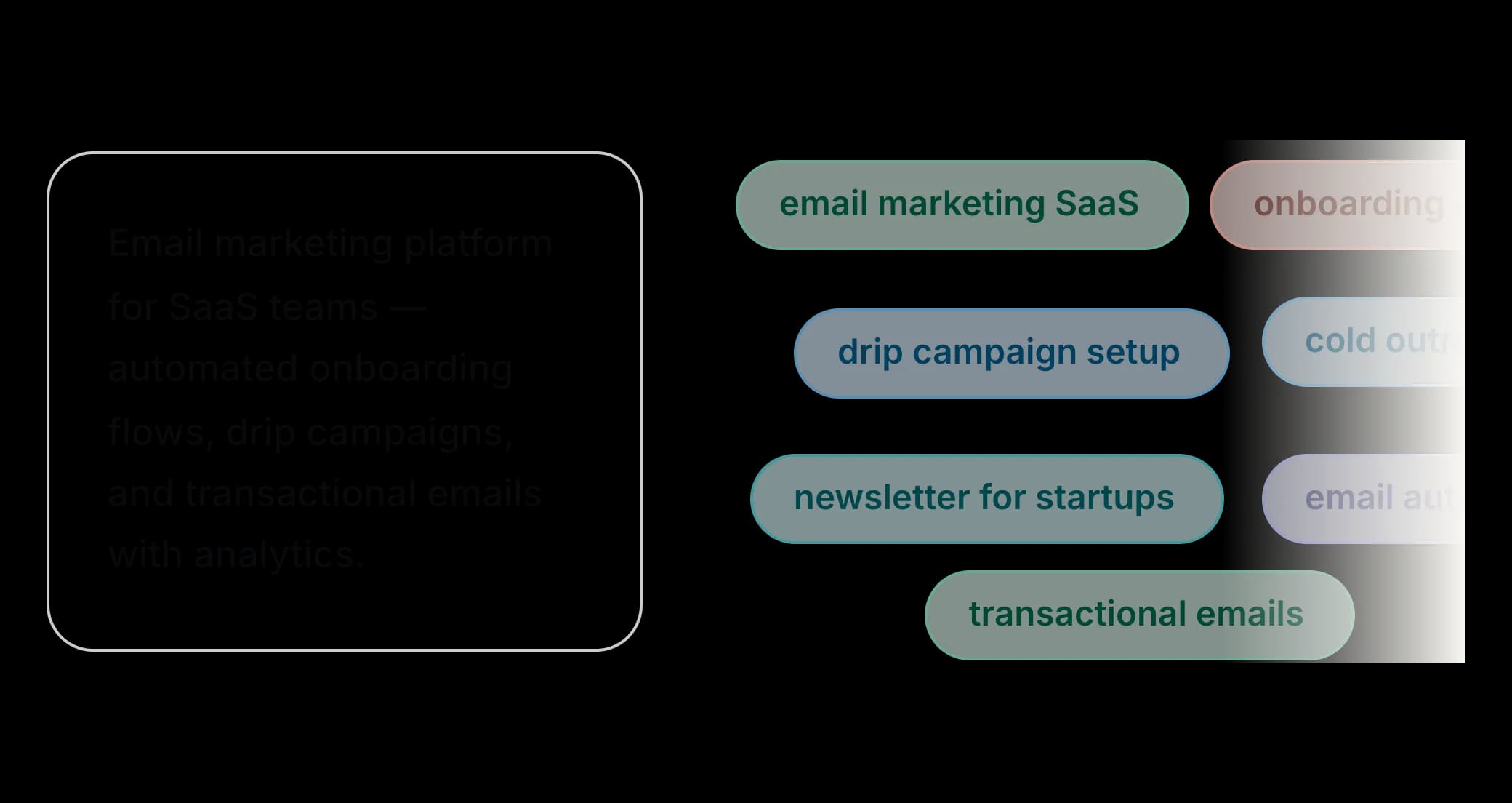
Most keyword tools expect you to already know your seed terms. Pick the wrong ones, and everything downstream is off. Here, you describe your topic in plain language and the AI infers 15–20 seeds for you, including angles you probably wouldn’t have thought of on your own.
SERP-similarity clustering
Grouped the way Google already groups them
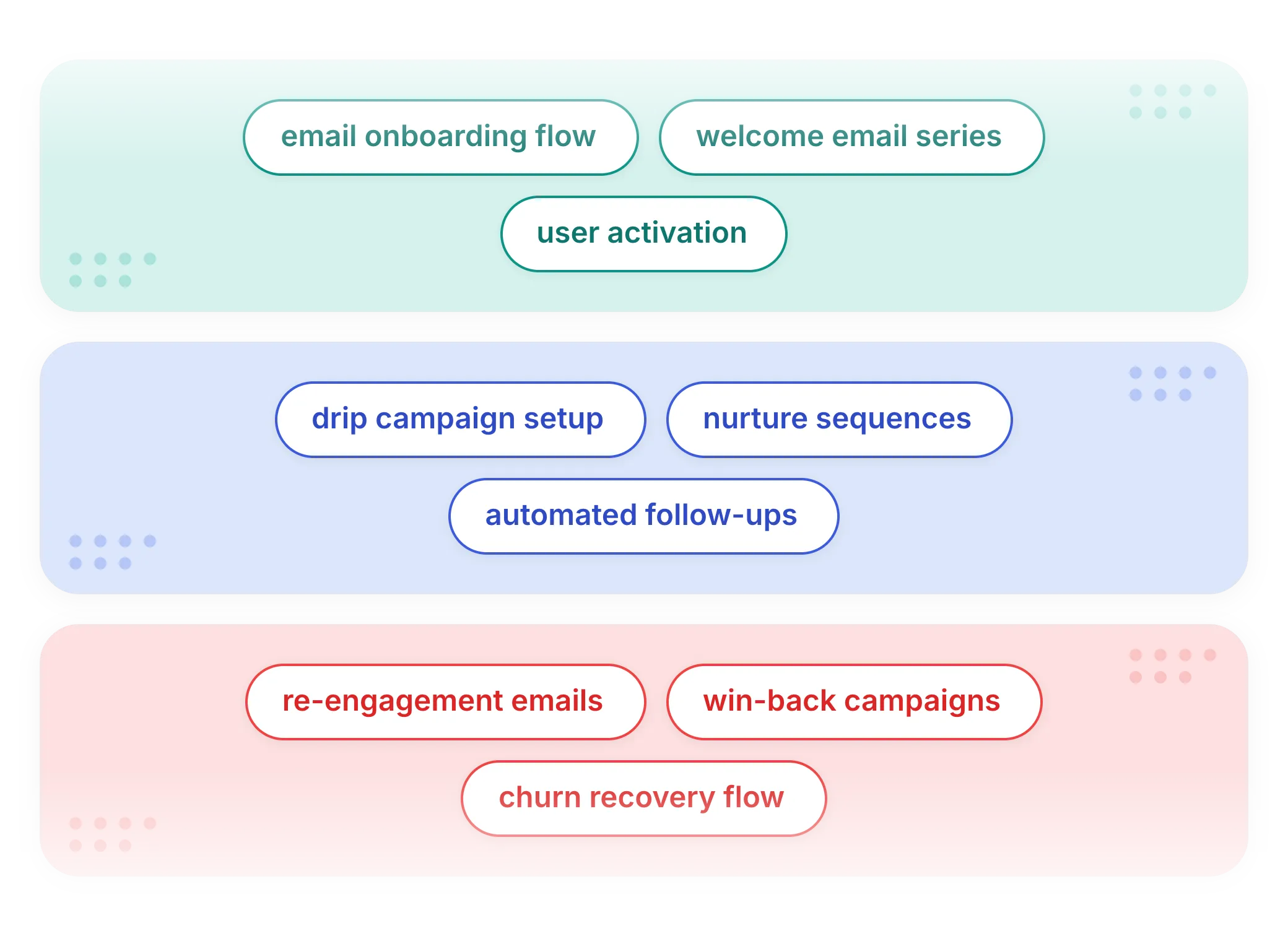
From roughly 500 expanded keywords, the tool pulls the top-7 results for each one. If two keywords share 3+ URLs in those results, they go in the same cluster, because Google already treats them as the same intent. One cluster, one article. You stop debating whether two phrases are "really" the same topic. The SERPs already answered that.
Pillars emerge from data
Pillars are a discovery, not a decision
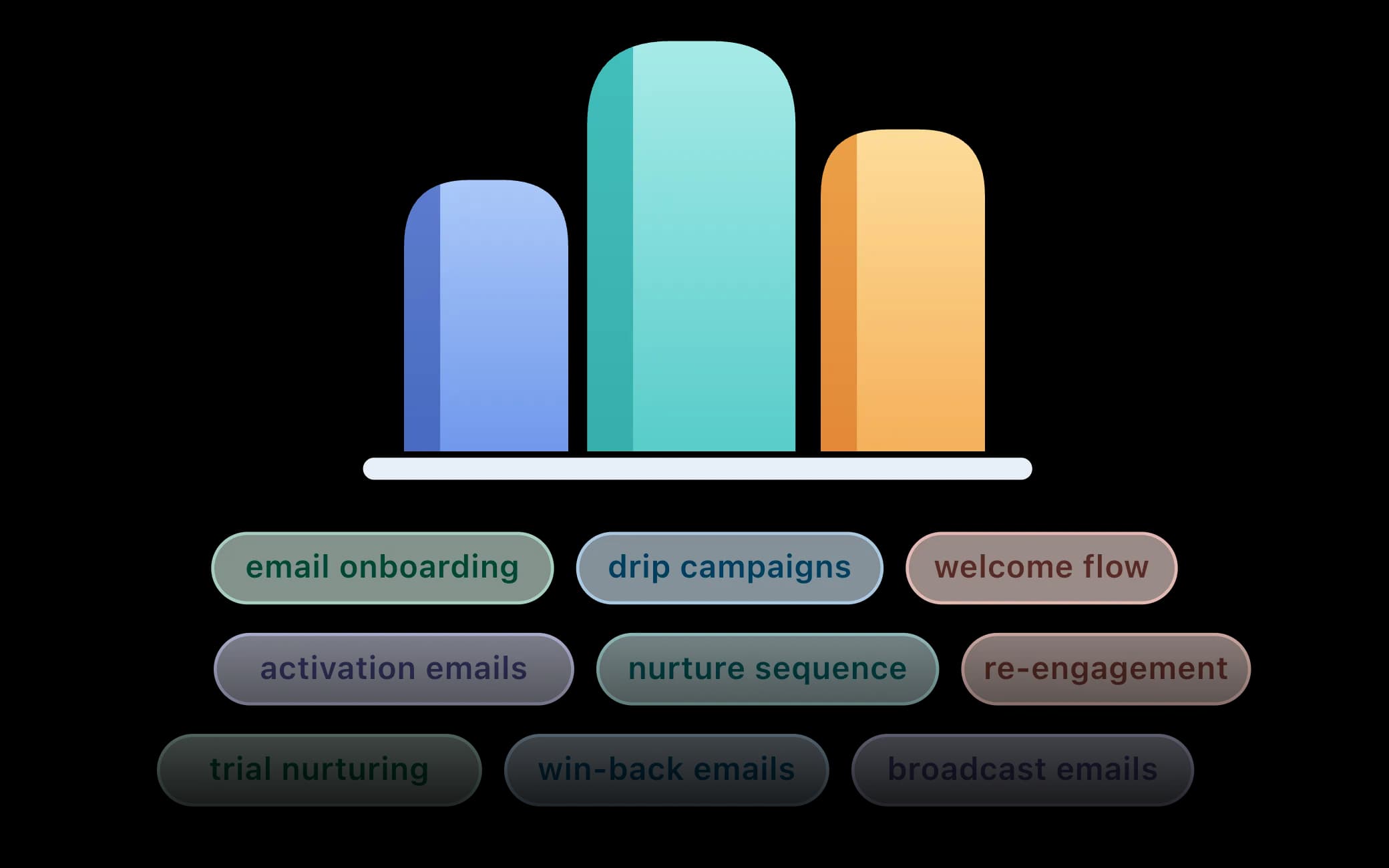
Normally you pick a pillar name first ("I’ll cover email marketing") and then go looking for keywords that fit. That means the biggest decision happens before you’ve seen any data. This works the other way around. Keywords expand, clusters form by SERP overlap, and then 10 pillars fall out of the clusters. The names come from the data, not from a brainstorm.
Winnability verdict per subtopic
Know which ones you can actually rank for before you write
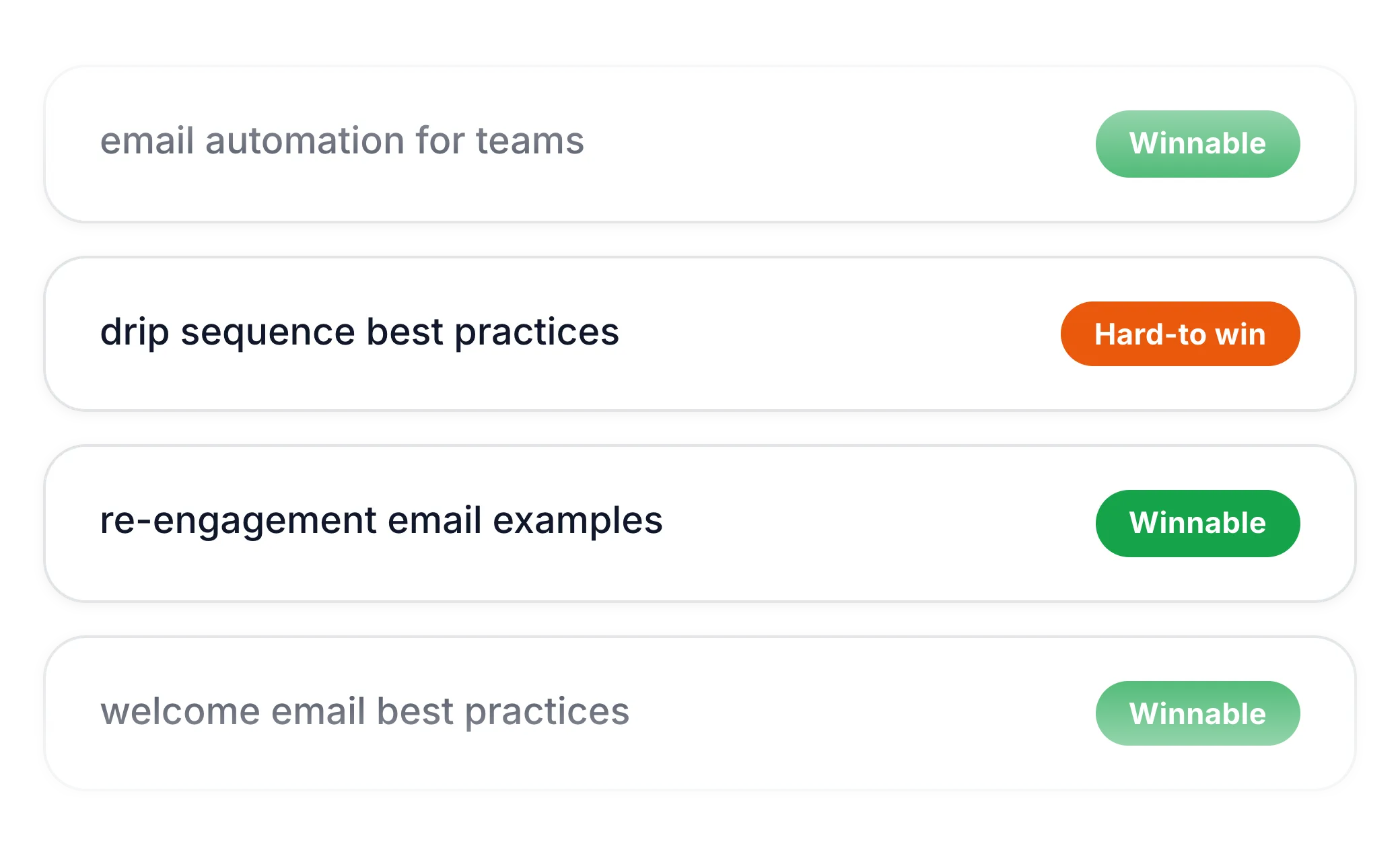
Ten pillars, 5–30 subtopics each. That can be 300 article ideas. You can’t write them all, so which ones are actually within reach? For every subtopic, an AI model looks at the SERPs already collected: how tough the keyword difficulty is, how good the ranking pages are, and how well the topic fits your site. Each one gets a verdict: Winnable or Hard-to-win. Filter by that before you commit to a single outline.
Topic clusters, step by step
From idea to content plan
Describe your topic
You describe your topic in plain language. The AI infers seed keywords automatically — no manual guessing, no wrong starting point.
Expand keywords
~500 real keywords expand from your seeds. Top-10 search results are fetched for each — you work from what Google actually returns.
Clusters by SERP overlap
Keywords sharing the same top results group into one cluster — Google already treats them as one intent. Each cluster = one article.
Your topical map, ready
10 pillars emerge from the clusters, forming your complete topical map. Before committing to any subtopic, you can check its SERP and get a verdict: winnable or hard-to-win.
FAQ
Frequently asked questions
Ready to build topic clusters?
Find your next topics to write
One idea. A complete topical map — pillars, pages, and winnability verdicts.
No credit card required. Free to start.